Science Bar – the new discussion format
How do scientific findings emerge? Why do some ideas change society—while others do not? And what questions are researchers exploring today?
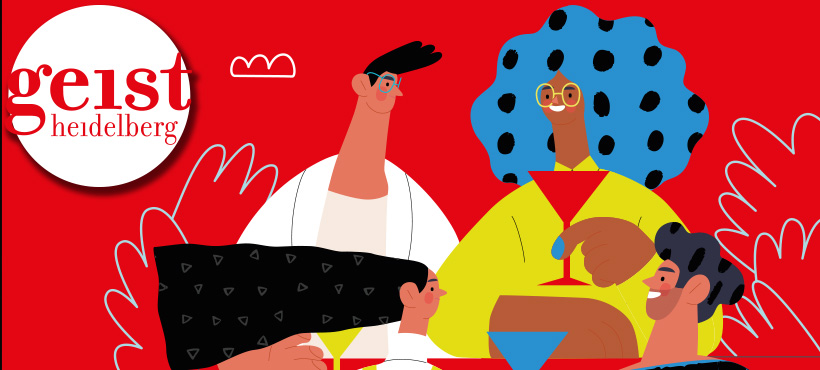
Scientific findings gain traction when they are discussed, scrutinized, and explored further. With the Science Bar, the DAI is creating a new space for interdisciplinary exchange and dialogue between science and the public. Scientists from various disciplines present current research in short talks and offer different perspectives on it. The topic of the first Science Bar is: Dr. Algorithm—How AI Is Changing Medicine.
Afterward, the focus shifts to questions, discussion, and diverse viewpoints—all in a relaxed bar atmosphere, over a drink, and accompanied by music. This format creates space for mutual curiosity and open dialogue between science and the public.
Featuring presentations by:
[caption id="attachment_76629" align="alignleft" width="150"] Foto: HITS[/caption]
Vincent Heuveline: How AI Is Changing Medical Research—and What Makes It into Clinical Practice
Vincent Heuveline is a mathematician, professor at Heidelberg University, and research group leader at the Heidelberg Institute for Theoretical Studies (HITS). His work focuses on data-driven methods, machine learning, and how AI can be used to identify new correlations in complex data. At the Science Bar, he’ll discuss what AI can actually achieve in medical research today—and which of these advancements are finding their way into medical practice.
[caption id="attachment_76630" align="alignleft" width="150"] Foto: HITS[/caption]
Jan Stühmer: Form Follows Function—How AI Helps in Protein Design
Jan Stühmer is an assistant professor at the Karlsruhe Institute of Technology (KIT) and heads the Machine Learning and Artificial Intelligence research group at the Heidelberg Institute for Theoretical Studies (HITS). He researches how AI can help design proteins with specific, desired properties. In recent years in particular, a “golden age” of de novo protein design has begun. Such tailor-made proteins could open up new possibilities for the development of drugs and therapies in the future.
[caption id="attachment_76631" align="alignleft" width="150"] Foto: Privat[/caption]
Julian Zoller: When AI Helps Make Decisions in Cancer Treatment
Julian Zoller is a physician and researcher at Heidelberg University Hospital and the German Cancer Research Center (DKFZ). He researches the use of AI in hematological oncology and develops computer-aided methods that make medical imaging data and clinical information usable for diagnosis, prognosis, and treatment. This also involves the question of how artificial intelligence can support physicians in making complex decisions—and what role humans will ultimately retain.
With music by Elisa Herbig (cello and vocals) and Matthias Debus (bass).
[caption id="attachment_76621" align="alignleft" width="150"] Foto: Privat[/caption]
Cellist, singer, and songwriter Elisa Herbig’s musical style spans classical, jazz, and pop. After completing her studies in Dresden and Oslo, she worked for many years as a freelance musician in Scandinavia and internationally. Today, she is active as a musician and music therapist in a variety of projects and releases her own music under the name ELISA—following her debut album “Outcome,” her second album is set to be released in February 2027.

Photo: Hugo Debus
Double bassist and electric bassist Matthias Debus studied jazz double bass in Würzburg and has been an integral part of the Mannheim jazz scene since 2002, where he performs in numerous ensembles and cross-genre projects ranging from jazz and world music to rock and contemporary music. In addition to his work as a musician, composer, and arranger, he is particularly committed to music education and, with his band “Improvidings,” introduces young people to jazz and improvisation.
Admission is free.
Registration: events@dai-heidelberg.de
In cooperation with

Details:
Date: 30.10.2026
Time: 19:00
Type:
Dr. Algorithm – How AI Is Changing Medicine
Research. Conversations. Drinks. Music.
Event type:
Geist Heidelberg In dialogue
Free admission